
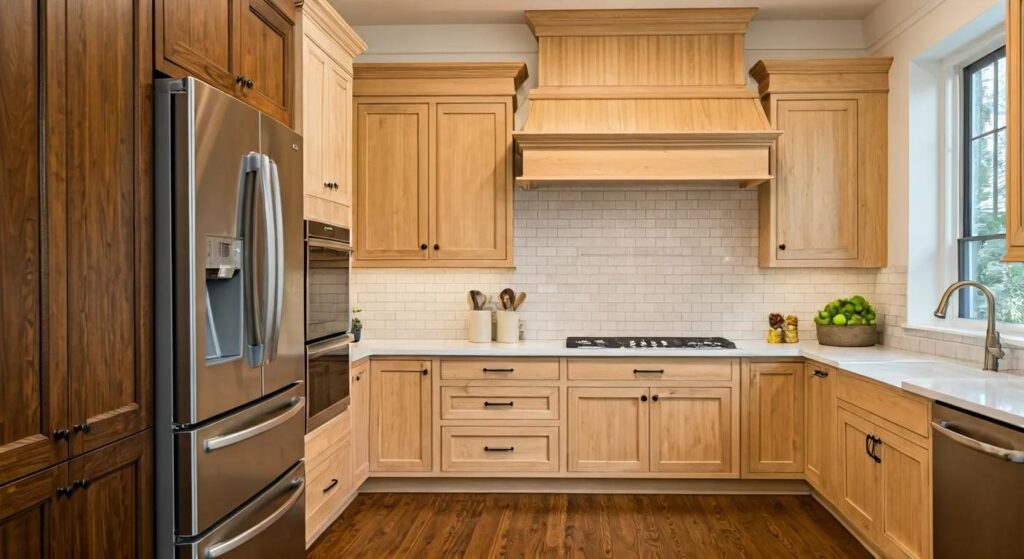
Custom Kitchen Cabinets Options: Which Style and Material Suits Your Kitchen?
Introduction
Are you seeking custom kitchen cabinets options that perfectly align with your design vision and daily needs? Choosing the ideal cabinetry involves balancing style, material, construction type, hardware trends, and storage functionality to transform your kitchen into a cohesive, efficient space. This guide explores the most popular cabinet styles, evaluates material durability and cost, compares inset versus overlay and framed versus frameless construction, highlights emerging hardware trends for 2025–2026, and examines innovative storage solutions. By understanding these core elements, homeowners can select cabinetry that enhances both aesthetics and performance in their kitchen.
What Are the Most Popular Custom Kitchen Cabinet Styles?
Custom kitchen cabinet styles define the aesthetic and functionality by tailoring door patterns, materials, and finishes to specific design themes, ensuring visual harmony and personalized appeal. Homeowners frequently select options that complement contemporary, traditional, or transitional kitchens and reflect their maintenance tolerance and budget.
Below is an overview of the five top cabinet styles and how they shape kitchen character:
| Entity | Attribute | Value |
|---|---|---|
| Shaker Style Cabinets | Design Feature | Recessed panel and clean lines for timeless appeal |
| Slab (Flat-Panel) | Aesthetic | Minimalist surface promoting modern visual continuity |
| Raised Panel Cabinets | Texture | Profiled central panel adding depth and classic elegance |
| Beadboard Cabinets | Texture | Narrow vertical planks offering cottage-style charm |
| Glass-Front & Louvered | Visibility & Ventilation | Display opportunities and airflow with decorative slats |
These five design frameworks guide the selection of door styles and materials for any kitchen, which sets the stage for detailed exploration of each option.
What Defines Shaker Style Cabinets and Their Key Features?
Shaker style cabinets feature a simple, four-piece frame with a recessed center panel, delivering an uncluttered silhouette that promotes versatility. By emphasizing functionality and craftsmanship, these cabinets bridge traditional and modern designs and support visual consistency in farmhouse, transitional, and minimalist kitchens.
Building on the purity of Shaker profiles, slab cabinets strip designs even further to achieve a sleek, contemporary look.
How Do Slab (Flat-Panel) Cabinets Offer Modern Minimalism?
Slab or flat-panel cabinets present a smooth, single-plane door surface that enhances modern minimalism and fosters seamless integration with integrated handles or push-to-open hardware. This construction maximizes clean sightlines and pairs effectively with polished or matte finishes, reinforcing a streamlined appearance.
The contrast between slab simplicity and raised panels underscores the diversity of aesthetic options available in custom cabinet design.
What Are the Characteristics of Raised Panel and Beadboard Cabinets?
Raised panel cabinets employ a thicker frame around a protruding center panel, which adds architectural detail and durability. Their multi-dimensional profile enriches traditional and classic-themed kitchens. Beadboard cabinets, by contrast, consist of narrow planks with rounded edges, creating a textured, cottage-like ambiance that suits coastal and country interiors.
These textured designs differ from glass-front and louvered styles, which combine decorative elements with display and ventilation benefits.
When Should You Choose Glass-Front or Louvered Cabinets?
Glass-front cabinets promote light diffusion and showcase china or decorative collections, reinforcing an open, airy feel in smaller kitchens. Louvered cabinets incorporate horizontal slats that facilitate airflow around contents, making them suitable for humid environments or for concealing appliances while maintaining ventilation. Both options serve dual aesthetic and practical purposes in eclectic and transitional kitchen designs.
How Do Custom Kitchen Cabinet Materials Compare in Durability and Cost?
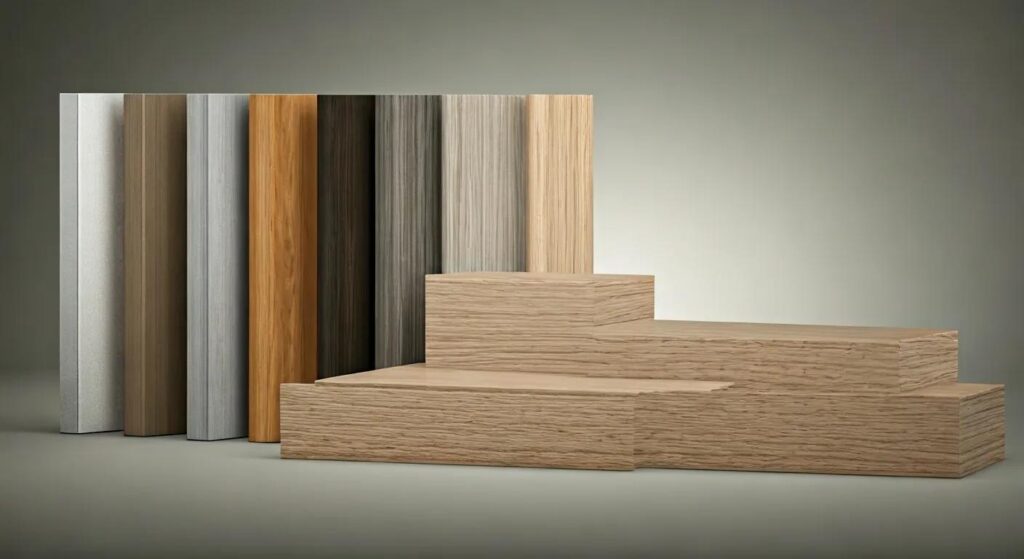
Custom kitchen cabinet materials determine structure longevity and budget alignment by balancing wear resistance, maintenance requirements, and price. Selecting the right substrate involves evaluating natural wood species, engineered wood products, and alternative surfaces for performance and visual appeal.
Here is a comparative overview of six common materials:
| Entity | Attribute | Value |
|---|---|---|
| Solid Wood | Durability | Excellent structural integrity and lifespan |
| Plywood | Cost | Moderate expense with high resistance to warping |
| MDF | Maintenance | Smooth finish potential with susceptibility to water damage |
| Laminate | Maintenance | Low upkeep and wide color range, may chip under heavy impact |
| Stainless Steel | Hygiene | Superior resistance to corrosion and heat, premium investment |
| Thermofoil | Cost | Budget-friendly with diverse finishes, less heat and moisture tolerant |
By comparing these substrates, homeowners can prioritize durability or cost-effectiveness based on kitchen use patterns, maintenance capacity, and design goals.
What Are the Pros and Cons of Solid Wood Cabinets?
Solid wood cabinets deliver unmatched durability, rich natural grain, and the ability to refinish surfaces over time. The premium cost and sensitivity to humidity fluctuations are considerations, but their long-term value lies in enduring beauty and strength.
How Do Plywood, MDF, and Laminate Materials Differ?
High-quality plywood offers dimensional stability and strong glue bonds, while medium-density fiberboard (MDF) enables flawless painted finishes at a lower price point but requires careful moisture protection. Laminate surfaces resist stains and scratches with minimal upkeep yet may delaminate if exposed to extreme conditions.
Understanding these engineered options sets the stage for evaluating stainless steel and thermofoil alternatives in specialized applications.
Are Stainless Steel and Thermofoil Cabinets Suitable for Your Kitchen?
Stainless steel cabinets are ideal for commercial-style kitchens seeking hygienic surfaces and heat resistance, though they carry a higher investment. Thermofoil provides cost-conscious homeowners with attractive, seamless finishes but demands caution around heat sources and continuous moisture exposure.
What Are the Differences Between Inset, Overlay, Framed, and Frameless Cabinets?
Cabinet construction types influence installation precision, storage capacity, and visual appeal by determining how doors and drawers interface with the cabinet box. Understanding these structural variations ensures the selected assembly aligns with desired aesthetics and functional requirements.
The table below contrasts key construction styles:
| Entity | Attribute | Value |
|---|---|---|
| Inset | Appearance | Flush doors within frame for furniture-like precision |
| Full Overlay | Coverage | Doors cover the frame entirely, maximizing visual surface |
| Partial Overlay | Coverage | Doors overlap partly, balancing cost and door reveal |
| Framed | Storage Efficiency | Face frame restricts interior opening width slightly |
| Frameless | Storage Efficiency | Wider openings for drawers and shelves, modern look |
These four frameworks define the way cabinetry performs and appears, informing design decisions on accessibility and style.
How Do Inset Cabinets Create a Seamless Look?
Inset cabinets require meticulous craftsmanship to align doors and drawers within a frame, resulting in a flush, built-in aesthetic reminiscent of fine furniture. This precision enhances design cohesion and conveys superior quality in traditional or high-end kitchens.
Inset construction naturally leads to considerations of overlay variations, which offer alternative cost and visual trade-offs.
What Are the Benefits of Overlay Cabinets: Full vs. Partial?
Full overlay cabinets provide nearly uninterrupted door surfaces that emphasize hardware-free designs and modern minimalism. Partial overlay options reduce material costs and reveal slight frame borders, enabling a more transitional or classic look while maintaining simpler joinery requirements.
Framed and frameless construction further diversify these installation choices by affecting internal storage capacity.
How Do Framed and Frameless Cabinet Constructions Affect Storage and Style?
Framed cabinets feature a face frame that adds rigidity but slightly limits opening width; they work well with decorative face frames and traditional pull hardware. Frameless (European) cabinets eliminate the face frame, expanding interior clearance and supporting flat-panel doors and integrated handles for a contemporary appearance.
What Are the Latest Trends in Custom Kitchen Cabinet Hardware?

Custom kitchen cabinet hardware enhances user experience and completes design narratives by coupling finish trends with ergonomic innovation. Current preferences pivot toward versatile metal combinations, matte finishes, and integrated solutions that streamline cabinet facades.
Key hardware trends for 2025–2026 include:
- Mixed metal pairings that layer brushed bronze with matte black to create dynamic contrast.
- Integrated handles and recessed pulls that maintain flush surfaces and simplify opening.
- Smart hardware with touchless technology or integrated LED indicators for modern convenience.
Which Hardware Finishes Are Popular for 2025 and 2026?
Matte black, brushed bronze, and warm metals like unlacquered brass dominate designer selections for their ability to coordinate with varied cabinet colors. White bronze and pewter finishes also gain traction for their subtle sheen and adaptability to both classic and modern interiors.
Embracing these finishes sets the stage for exploring mixed-metal combinations and advanced handle designs.
How Do Mixed Metals and Matte Black Hardware Enhance Cabinet Style?
Combining mixed metals introduces depth and personality, allowing homeowners to create custom accents that highlight architectural features. Matte black hardware offers a bold, tactile contrast against light cabinetry and enhances a minimalist or industrial aesthetic with streamlined silhouettes.
These applications naturally lead to innovations in integrated and smart hardware solutions.
What Are Innovative Hardware Designs Like Integrated Handles and Smart Technology?
Integrated handles and channel pulls conceal grip mechanisms within door profiles, promoting uninterrupted cabinet planes. Smart hardware integrates sensors or touchless activation, enabling hands-free access and status indicators for features like soft-close drawers, elevating both convenience and hygiene in contemporary kitchens.
How Can Custom Kitchen Cabinet Storage Solutions Improve Organization?
Efficient storage solutions transform cabinets into highly functional assets by optimizing space utilization, improving accessibility, and reducing clutter. Tailored organizers and pull-out mechanisms ensure that each cabinet compartment contributes to streamlined kitchen workflows.
Below is a summary of common storage enhancements:
| Entity | Attribute | Value |
|---|---|---|
| Pull-Out Shelves | Accessibility | Retractable platforms that bring items within easy reach |
| Lazy Susans | Corner Use | Rotating trays that maximize blind-corner cabinet space |
| Tray Dividers | Organization | Adjustable slots to separate baking sheets and cutting boards |
| Spice Racks | Accessibility | Tiered racks for clear visibility and easy selection |
| Pantry Organizers | Capacity | Modular bins and shelving systems for bulk storage |
These tailored storage solutions integrate seamlessly into custom cabinetry to boost utility and maintain a tidy kitchen environment.
What Are the Benefits of Pull-Out Shelves and Lazy Susans?
Pull-out shelves enhance accessibility by sliding contents forward, preventing items from getting lost in deep cabinets. Lazy Susans adapt to corner spaces, rotating stored goods into view and increasing usable storage in otherwise difficult areas.
This rotation and extension concept extends to smaller accessories like dividers and racks for optimal organization.
How Do Tray Dividers and Spice Racks Maximize Cabinet Space?
Tray dividers create vertical slots that neatly separate flat items, reducing stack instability and facilitating quick retrieval. Spice racks utilize tiered shelving within cabinets or on doors to keep seasonings visible and organized, saving countertop space and streamlining meal preparation.
Well-planned organizers culminate in large-scale systems like pantry modules for comprehensive bulk storage.
When Should You Consider Pantry Organizers for Your Custom Cabinets?
Pantry organizers are ideal in tall cabinets or dedicated pantry rooms, offering adjustable shelving, pull-out baskets, and clear containers for bulk ingredients. They improve inventory management and provide ergonomic access to dry goods, making them a valuable addition to any custom cabinet plan focused on long-term functionality.
Custom kitchen cabinets with thoughtfully selected styles, materials, construction types, hardware trends, and storage solutions empower homeowners to craft kitchens that reflect personal taste and deliver practical performance. Refer to our sections on Shaker style cabinets, Solid wood cabinets, Inset vs overlay cabinets, Matte black hardware trends, and Pull-out shelves to explore detailed options for your next renovation. Investing in custom solutions ensures lasting value and a kitchen that is both aesthetically compelling and supremely functional.