
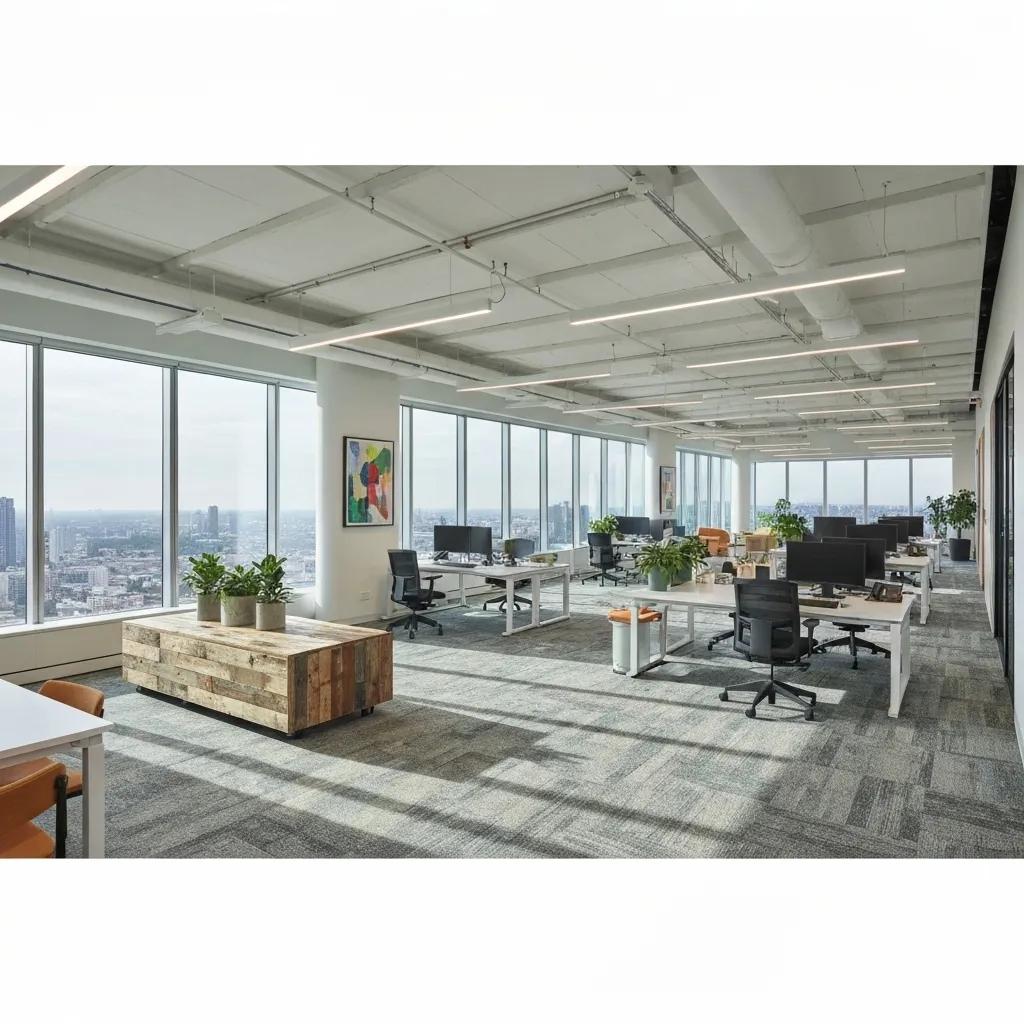
Eco-Friendly Renovation Tips for a Greener Office: Sustainable Design and Energy Efficiency Strategies
Renovating an office with environmentally friendly practices can reduce energy consumption by up to 30% while boosting employee health and cutting operational costs. This guide delivers actionable environmentally friendly office renovation tips by mapping key benefits, material choices, energy-saving measures, air-quality improvements, and circular-economy principles. Readers will discover how sustainable design reduces environmental impact, elevates well-being, maximizes efficiency, and curbs waste with practical examples and comparative insights. Partnering with seasoned consultants in sustainable office renovation ensures compliance with green building certifications and unlocks lasting ROI.
What Are the Key Benefits of Eco-Friendly Office Renovations?
Eco-friendly office renovations combine sustainable design, energy efficiency, and healthy materials to deliver measurable environmental, human, and financial gains.
- Reduced carbon footprint through efficient systems and renewable sourcing
- Enhanced employee well-being via improved indoor air and access to daylight
- Long-term savings from lower utility bills and durable, low-maintenance finishes
These benefits lay the foundation for understanding how design choices directly shape impact and productivity.
How Does Sustainable Office Design Reduce Environmental Impact?
Sustainable office design minimizes resource use by integrating efficient systems and eco-sourced materials, lowering greenhouse gas emissions and waste generation.
| Design Feature | Mechanism | Impact |
|---|---|---|
| Passive solar glazing | Captures and distributes natural heat | Cuts heating energy by 20% |
| High-R insulation | Reduces thermal transfer through walls | Lowers HVAC load by up to 30% |
| Rainwater harvesting | Collects runoff for non-potable use | Decreases municipal water demand |
Integrating these features reduces reliance on fossil fuels and paves the way for healthier air-quality strategies.
In What Ways Do Green Renovations Improve Employee Well-being and Productivity?
Green renovations boost well-being by introducing non-toxic finishes and biophilic elements that promote mental clarity and reduce stress. Employees in sustainably certified workplaces often report 15% higher focus and 25% fewer sick days. Incorporating daylight, living walls, and low-emission materials cultivates a healthier indoor environment and sustained productivity.
Linking health gains to cost metrics highlights the next advantage of eco-upgrades.
New Report Links Office Design with Staff Health and Productivity
How Can Eco-Friendly Renovations Lead to Cost Savings and Operational Efficiency?
Upgrading to energy-efficient components yields rapid payback and streamlined maintenance.
| Upgrade | Annual Savings | Operational Benefit |
|---|---|---|
| LED lighting retrofit | 75% lower lighting cost | 25× longer bulb lifespan |
| Smart thermostat integration | 15% reduction in HVAC energy | Automated climate control |
| Modular office furniture system | 40% less waste disposal | Flexible reconfiguration |
These savings reinforce how circular-design thinking and material selection further support sustainability goals.
A Methodological Framework for Sustainable Office Building Renovation Using Green Building Rating Systems and Cost-Benefit Analysis
Which Sustainable Materials Are Best for Green Office Renovations?

Selecting sustainable materials roots a renovation in health and resource stewardship, with low embodied carbon and minimal toxin emissions. For example, reclaimed timber floors and recycled steel framing illustrate how reused resources foster both aesthetic warmth and ecological responsibility.
| Material | Key Attribute | Indoor Benefit |
|---|---|---|
| Reclaimed wood | High durability, low energy reuse | Rich thermal mass, character |
| Recycled metal | Structural strength | Limits virgin-resource demand |
| Bamboo flooring | Rapidly renewable | Natural antimicrobial surface |
Understanding these options feeds into specific material applications that follow.
What Are the Advantages of Reclaimed Wood and Recycled Metals?
Reclaimed wood preserves old-growth character and saves approximately 75% of the energy needed for new timber processing. Recycled metals reduce mining-related emissions by up to 60%. Both choices deliver unique textures and conform to circular-economy goals while enhancing structural resilience.
These reclaimed and recycled elements naturally lead into indoor health considerations.
How Do Low-VOC Paints and Eco-Friendly Flooring Improve Indoor Air Quality?
Low-VOC paints emit fewer harmful chemicals by using water-based binders and natural pigments, cutting off-gassing by 90%. Eco-friendly flooring such as cork or linoleum resists mold and releases negligible particulates. Together they create a cleaner breathing environment that directly impacts employee comfort and cognitive performance.
Improving material choices sets the stage for optimizing overall energy use in workspace design.
How Can Energy Efficiency Be Maximized in Office Renovations?
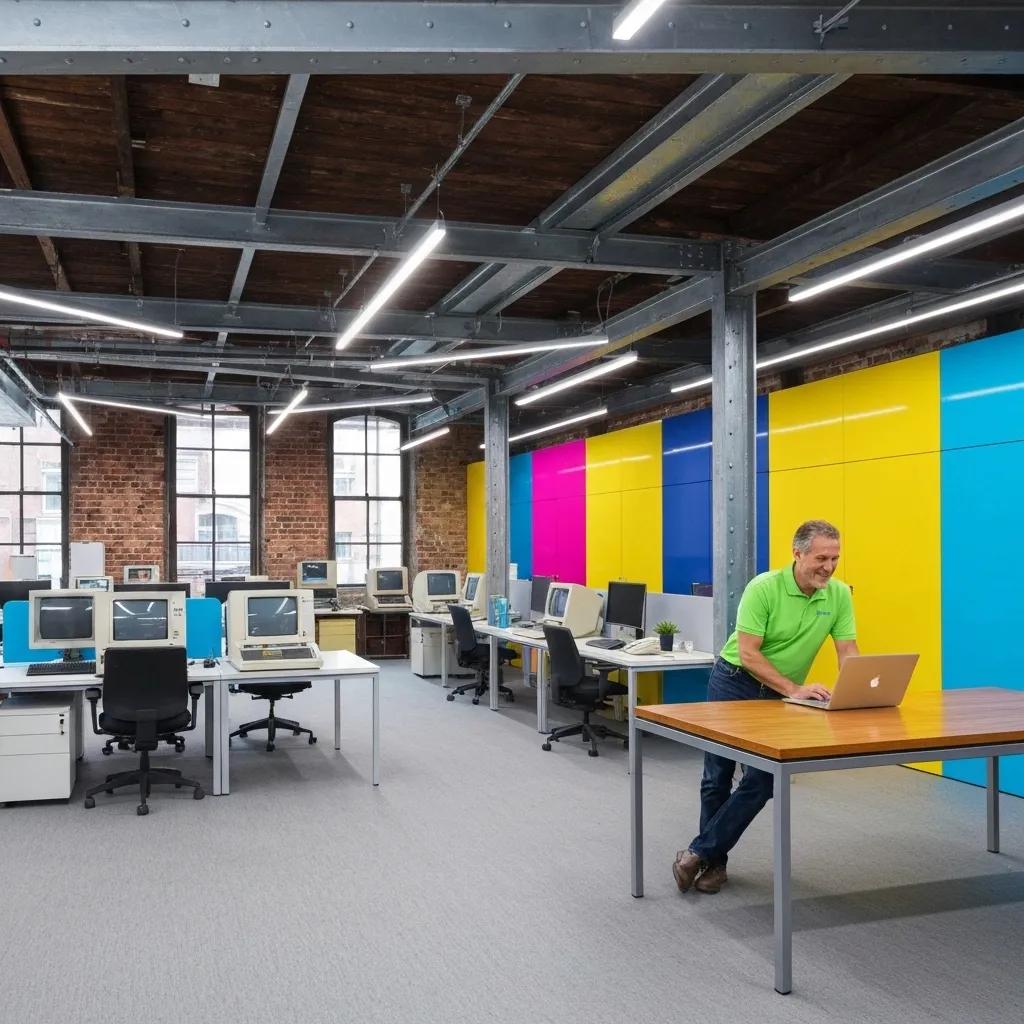
Energy efficiency integrates advanced lighting, HVAC, and daylight strategies to shrink a building’s energy profile. By synchronizing systems, offices can achieve up to 40% lower utility costs and a quicker return on investment than conventional retrofits.
- Upgrade to LED and smart lighting networks that dim according to occupancy.
- Optimize HVAC zoning with high-efficiency heat pumps and predictive controls.
- Harness natural light through skylights and passive solar orientation.
These measures illustrate the synergy of technology and design in green offices.
What Are the Benefits of LED Lighting and Smart Lighting Systems?
LED fixtures transform energy use by consuming 75% less electricity than incandescent bulbs. When paired with motion sensors and daylight harvesting, lighting controls can further cut lighting energy by 30% while enhancing visual comfort and circadian support for staff.
Building on smart illumination, HVAC optimization plays a pivotal role.
How Can HVAC Systems Be Optimized for Energy Savings?
High-efficiency heat pumps and variable-speed fans minimize energy draw by matching ventilation rates to actual occupancy. Implementing heat-recovery ventilators recycles thermal energy from exhaust air, yielding up to 35% reduction in heating and cooling loads.
Reduced HVAC demand invites exploration of passive strategies.
How Does Harnessing Natural Light and Passive Solar Design Enhance Green Offices?
Passive solar features such as south-facing glazing and thermal mass floors capture daytime heat and daylight, lowering both lighting and heating energy by up to 25%. Integrating light shelves and internal glazing diffuses sunlight deeply into workspaces, boosting morale and decreasing artificial-lighting dependence.
How Do Indoor Air Quality Improvements Support a Healthier Workspace?
Improving indoor air quality combines natural purification with mechanical filtration to reduce allergens and volatile organic compounds. Cleaner air promotes cognitive health and fewer respiratory issues, directly affecting productivity metrics and wellness outcomes.
What Role Does Biophilic Design and Indoor Plants Play in Air Purification?
Indoor plants and living green walls remove airborne pollutants like formaldehyde and benzene through phytoremediation, while introducing natural textures that reduce stress and improve focus. Strategic plant placement also balances humidity levels for optimal comfort.
Transitioning from living elements to mechanical systems ensures comprehensive air cleanliness.
How Do Advanced Ventilation and Filtration Systems Reduce Indoor Pollutants?
High-MERV filters and demand-controlled ventilation systems detect CO₂ and adjust airflow to maintain ideal air exchange rates. Together, these systems lower particulate matter by 80% and sustain consistent oxygen levels, safeguarding occupant health throughout the workspace.
What Are Circular Economy Principles and How Do They Apply to Office Design?
Circular economy principles prioritize waste minimization, reuse, and product longevity to extend material life cycles. Designing for disassembly and selecting refillable or modular components enable continuous reuse, aligning resource flows with sustainable development goals.
- Apply design-for-disassembly techniques that allow easy part replacement
- Select modular furniture that adapts to layout changes without disposal
- Incorporate take-back programs for outdated equipment
Embedding circular thinking reduces waste and fosters ongoing cost control.
How Can Designing for Disassembly and Material Reuse Reduce Waste?
Designing for disassembly employs fasteners and standardized components that detach easily, allowing parts to be refurbished or recycled rather than landfilled. This approach can cut renovation waste volumes by over 50% and lower embodied-carbon impacts of future updates.
These strategies naturally extend into furniture recycling practices.
What Are Effective Strategies for Upcycling and Recycling Office Furniture?
Upcycling involves re-finishing or re-configuring existing desks and cabinets, turning functional elements into fresh workstations. Partnering with specialized refurbishers and donation networks diverts surplus furniture from landfills and fosters a circular asset lifecycle.
By combining sustainable design, material selection, energy efficiency, air-quality controls, and circular-economy methods, greener offices emerge as healthy, cost-effective, and environmentally responsible environments ready for future demands.