Commercial Building Exterior Renovations You Need to See: Key Upgrades to Enhance Value and Appeal
Commercial building exterior renovations transform aging facades into high-performance, brand-defining assets by integrating durable materials and sustainable technologies. With a $234.9 billion market in 2023, commercial exterior renovation services enhance curb appeal, energy efficiency, structural integrity, and long-term property value. This guide covers the latest facade trends, eco-friendly upgrades, building envelope solutions, ROI strategies, and project management best practices to inform strategic investments in commercial property exteriors.
[Commercial Building Exterior Renovation Market Analysis]
What Are the Most Impactful Commercial Facade Renovation Trends?

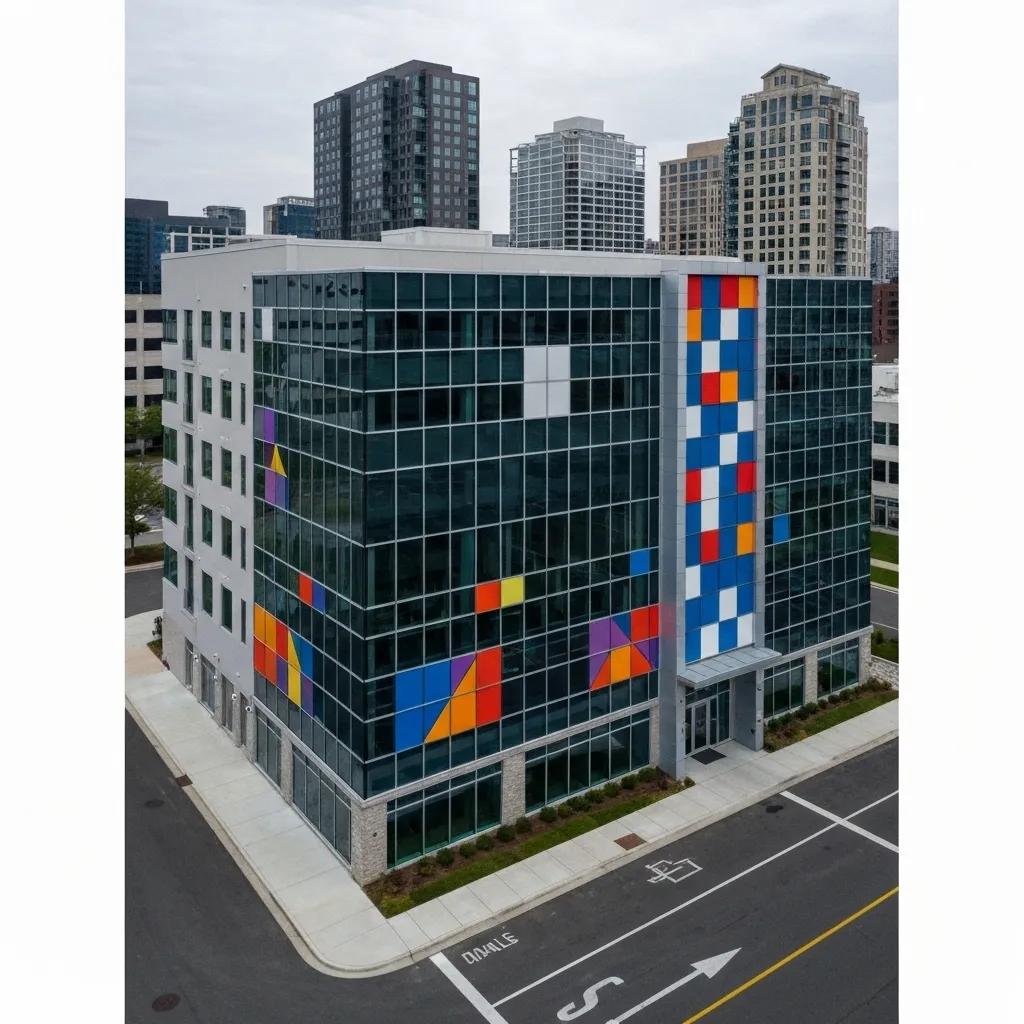
Commercial facade renovation trends encompass aesthetic and structural innovations that modernize building exteriors through advanced materials and design techniques, such as glass curtain wall installations on retail centers that boost transparency and light diffusion. Key trends include:
- Incorporation of full-height glass curtain walls to maximize natural light and brand visibility
- Use of lightweight metal panel cladding for sleek profiles and faster installation
- Textured fiber cement siding for customizable finishes and enhanced weather resistance
These evolving strategies illustrate how material selection drives curb appeal and brand perception while paving the way for cost-saving sustainable upgrades.
How Do Modern Facade Designs Improve Curb Appeal and Brand Image?
Modern facade designs improve curb appeal by integrating bold geometry, transparent glazing, and signature color palettes that reflect corporate identity. By emphasizing visual hierarchy and cohesive signage placement, they reinforce brand recognition and draw customer attention toward entry points rather than blending into surrounding structures. Selecting the ideal materials underpins these modern design improvements.
Which Materials Are Best for Commercial Facade Modernization?
Optimal materials for commercial facade modernization combine performance with design flexibility, including fiber cement panels, architectural metal cladding, and high-performance glass systems. Each material offers distinct advantages:
| Material | Characteristic | Primary Advantage |
|---|---|---|
| Fiber Cement Panels | High durability | Low maintenance and weather resistance |
| Metal Cladding | Lightweight strength | Sleek aesthetics and structural support |
| Glass Facade Systems | Thermal insulation | Daylighting and energy savings |
[Facade Materials and Performance]
Comparing these facade materials clarifies the balance between longevity, visual impact, and operational efficiency ahead of exploring specific system benefits.
What Are the Benefits of Architectural Metal and Glass Facade Systems?
Architectural metal and glass facade systems enhance structural performance and aesthetic appeal by combining corrosion-resistant alloys with thermally broken glazing. Their seamless integration boosts daylight penetration, improves insulation, and reduces long-term maintenance costs. Examining these system-level benefits sets the stage for sustainable exterior upgrade discussions.
How Can Sustainable Commercial Exterior Upgrades Reduce Costs and Environmental Impact?
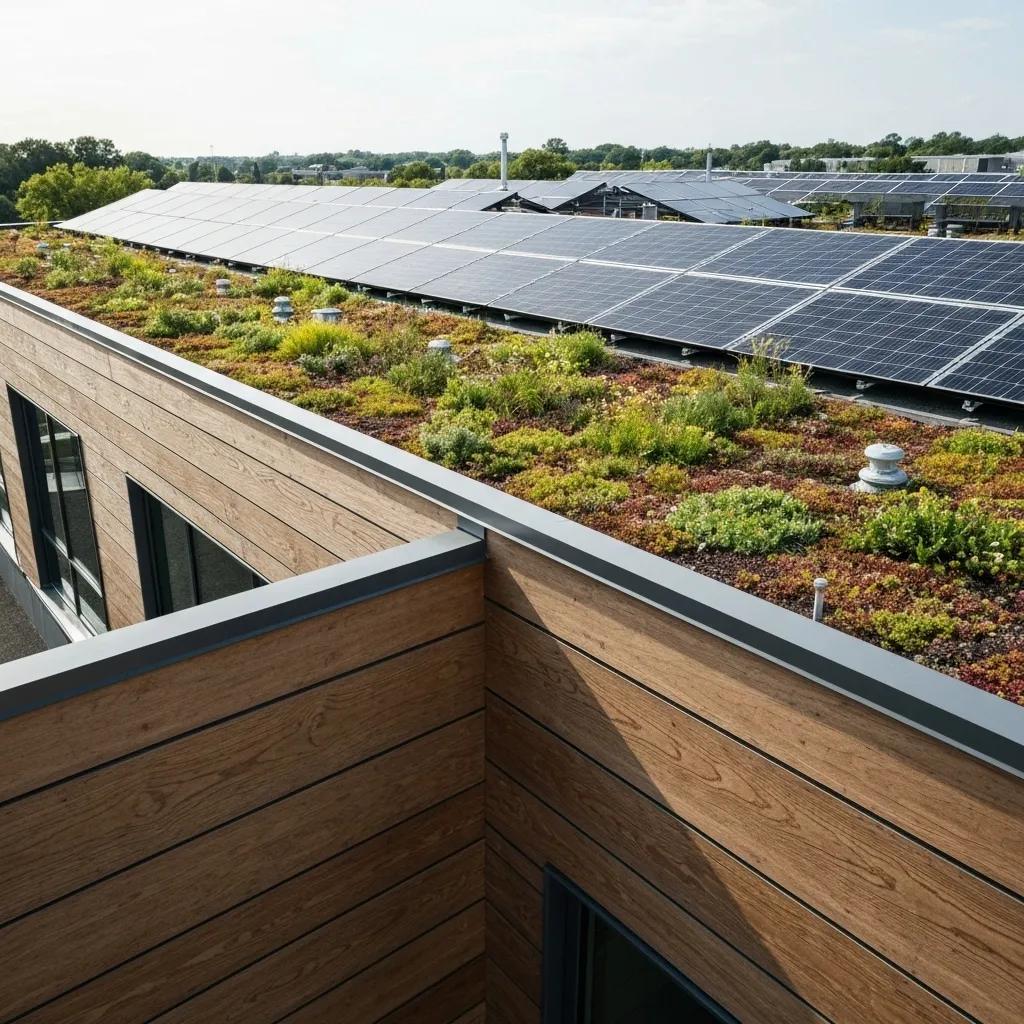
Sustainable commercial exterior upgrades integrate renewable materials and energy-efficient installations to lower operating expenses and carbon emissions, as seen in solar-ready roofing on corporate campuses. Core sustainable upgrades include:
- Installation of green roofing systems to manage stormwater and improve insulation
- Adoption of recycled or rapidly renewable siding materials to minimize embodied carbon
- Integration of photovoltaic panels on south-facing elevations to generate on-site clean energy
Implementing these eco-friendly modifications not only trims costs but also creates healthier environments before detailing energy-efficient openings.
What Are Energy-Efficient Window and Door Options for Commercial Buildings?
Energy-efficient windows and doors support lower HVAC loads by combining double- or triple-glazed units with low-E coatings and thermally broken frames. Insulated metal doors fitted with perimeter seals further prevent air infiltration and improve occupant comfort. These high-performance openings lay the foundation for broader sustainable envelope solutions.
How Do Green Roofing and Sustainable Siding Materials Enhance Building Performance?
Green roofing and recycled siding materials shield structures from thermal extremes, reduce urban heat island effects, and extend service life.
| Upgrade Type | Performance Attribute | Environmental Impact |
|---|---|---|
| Green Roof | Evapotranspiration cooling | Reduced stormwater runoff |
| Recycled Composite Siding | Moisture resistance | Lower embodied carbon footprint |
By balancing performance and sustainability, these exterior elements prepare commercial properties for integrated envelope improvements.
What Is Biophilic Design and How Does It Apply to Commercial Exteriors?
Biophilic design on commercial exteriors incorporates living walls, natural stone accents, and integrated planters that promote occupant well-being and connect buildings to their surroundings. These organic features improve air quality, soften hardscape visuals, and support corporate sustainability goals. Embracing biophilic principles bridges the gap between aesthetic innovation and environmental stewardship.
What Are Essential Commercial Building Envelope Renovation Solutions?
Commercial building envelope solutions encompass roofing renovation, advanced siding installation, and comprehensive waterproofing measures to protect structural components. Key envelope services include:
- Replacement of worn roofing membranes with synthetic or metal systems for extended service life
- Application of fiber cement, composite, or metal siding to enhance weather resistance
- Sealing joints and penetrations to prevent moisture intrusion and energy loss
Addressing these core elements strengthens building performance before exploring ROI optimization strategies.
How Does Commercial Roofing Renovation Improve Structural Integrity?
Commercial roofing renovation improves structural integrity by installing reinforced membranes, upgrading insulation layers, and repairing underlying decking systems. Modern roofing assemblies shed water efficiently, reduce load on supporting beams, and decrease vulnerability to leaks. These improvements form the basis for advanced siding and sealing measures.
What Are Advanced Commercial Siding Options and Their Benefits?
Advanced siding solutions—such as fiber cement panels, composite rainscreen cladding, and aluminum composite material (ACM) systems—combine durability with design versatility. Each siding type offers superior impact resistance, low maintenance, and enhanced thermal performance. Upgrading to these modern sidings ensures long-term protection and aesthetic flexibility.
Why Is Building Envelope Waterproofing and Sealing Critical for Longevity?
Waterproofing and sealing the building envelope prevents moisture ingress that can degrade insulation, corrode structural members, and foster mold growth. Effective sealants and membrane systems protect against wind-driven rain and vapor migration. Ensuring a watertight envelope is essential before undertaking costly facade or interior renovations.
How Can You Maximize ROI with Commercial Exterior Renovations?
Maximizing ROI from commercial exterior renovations involves strategic material selection, phased implementation, and brand-focused design enhancements that attract tenants and customers. High-impact tactics include:
- Choosing durable, low-maintenance materials to reduce life-cycle costs
- Phasing work to limit business interruption and preserve revenue streams
- Incorporating signature architectural elements that reinforce brand identity
These ROI strategies lay the groundwork for financial planning and incentive discovery in subsequent discussions.
What Are the Typical Costs and Financing Options for Commercial Exterior Remodels?
Commercial exterior remodel costs vary by scope but generally range from $50 to $150 per square foot, depending on materials and labor. Financing options include equipment-lease agreements, property improvement loans, and energy-efficiency rebate programs. Understanding these financial structures enables more accurate project budgeting and cash-flow management.
How Does Renovation Increase Commercial Property Value and Brand Standing?
Exterior renovations boost property valuations by enhancing marketability, improving energy ratings, and attracting premium tenants. Updated facades create striking first impressions that elevate brand standing and community perception. These value drivers directly support increased rental rates and occupancy levels.
Are There Tax Incentives or Green Certifications That Support Exterior Upgrades?
Tax incentives and certifications—such as federal energy tax credits, LEED certification, and local green building grants—reward investments in efficient roofing, high-performance glazing, and sustainable cladding. These programs offset renovation costs while signaling corporate commitment to environmental responsibility.
What Are Best Practices for Managing Commercial Exterior Renovation Projects?
Effective project management for commercial exterior renovations hinges on detailed planning, stakeholder communication, and rigorous quality control. Best practices include:
- Developing a phased schedule aligned with business operations to minimize disruption
- Establishing clear roles, responsibilities, and reporting protocols for all parties
- Implementing ongoing performance monitoring to ensure specifications are met
Applying these practices ensures smoother execution and predictable outcomes before selecting contractors and navigating regulations.
How Do You Plan and Schedule a Commercial Exterior Renovation to Minimize Business Disruption?
Planning and scheduling a renovation in off-peak hours or weekends reduces impact on daily operations. Utilizing prefabricated panels and modular installation techniques accelerates progress while maintaining safety. Coordinating closely with facility managers preserves continuity and stakeholder satisfaction.
What Permits and Regulations Must Be Considered for Commercial Renovations?
Commercial renovations require compliance with local building codes, zoning ordinances, fire safety standards, and environmental regulations. Permit acquisition processes often involve structural, mechanical, and energy-compliance reviews. Aligning renovation scope with regulatory requirements prevents costly delays.
How Do You Choose the Right Commercial Exterior Renovation Contractor?
Selecting a contractor involves evaluating relevant experience, verifying proper licensing and insurance, and reviewing a portfolio of similar projects. Checking references and confirming financial stability ensures reliable performance. Partnering with a qualified contractor underpins successful renovation outcomes.
Commercial building exterior renovations offer powerful ways to enhance brand identity, boost property value, and improve long-term performance. By leveraging cutting-edge facade trends, sustainable practices, robust envelope solutions, and disciplined project management, property owners can realize significant returns. Engaging experienced commercial exterior renovation services ensures each upgrade aligns with operational goals and environmental objectives. Investing in these strategic improvements transforms exteriors into competitive assets that stand the test of time.