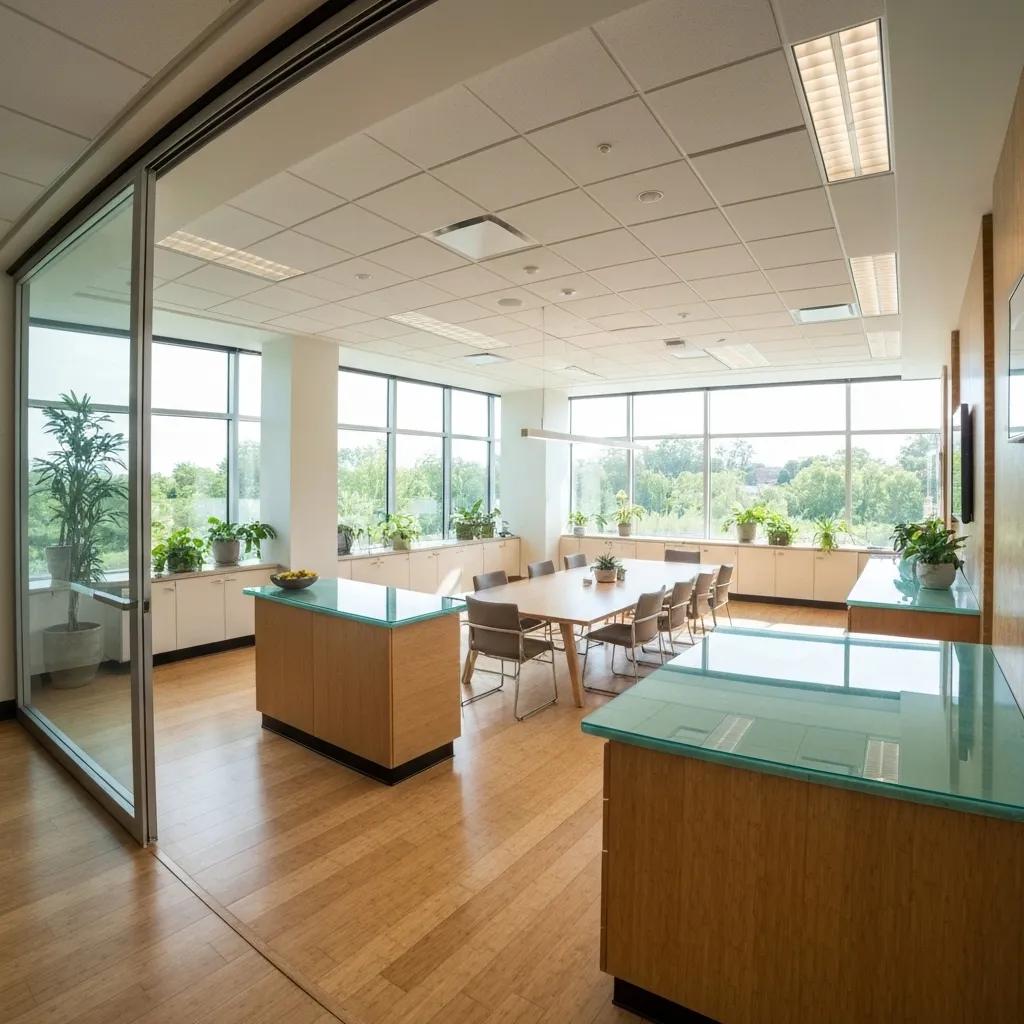
How to Renovate Your Office with Sustainable Materials for Eco-Friendly Spaces
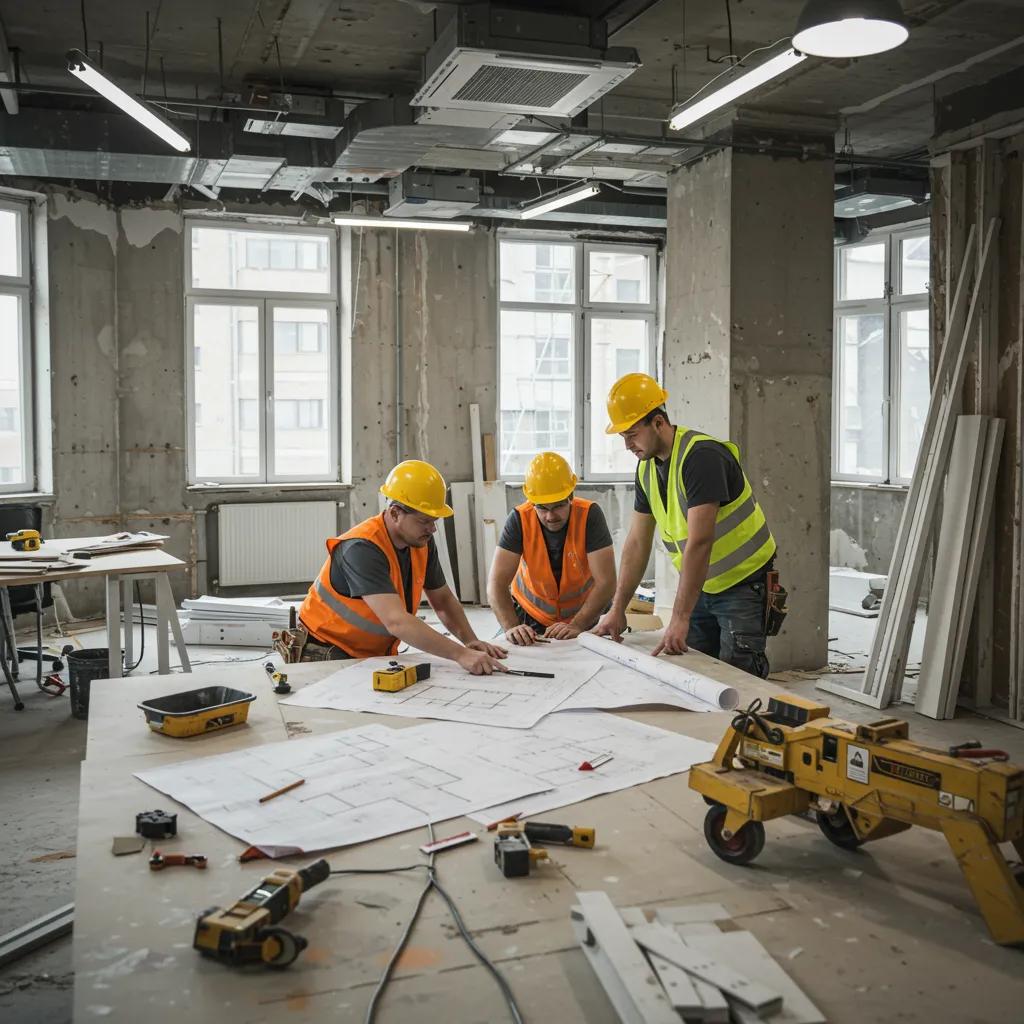
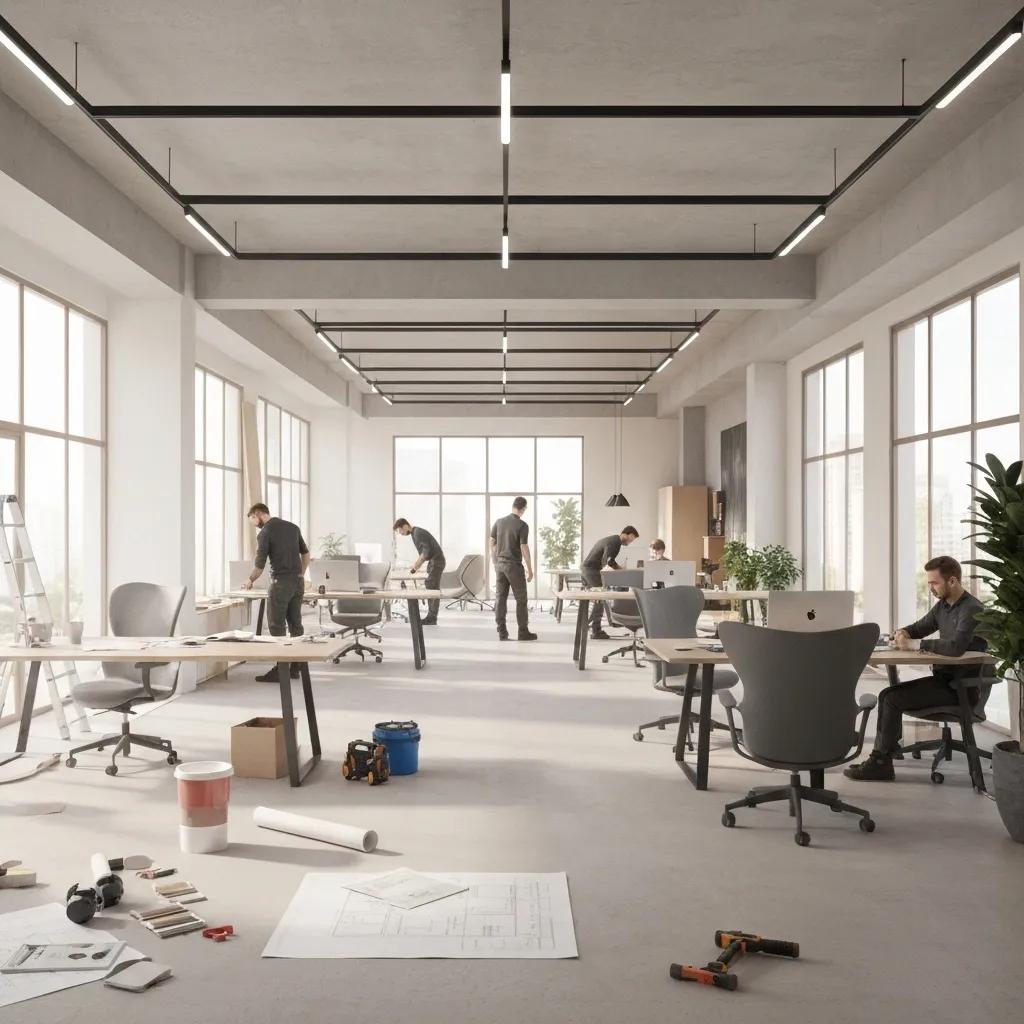
Renovating an office with sustainable materials can cut carbon emissions by up to 40% while boosting employee productivity by 26%, making it a strategic choice for modern businesses. This guide explains how to renovate an office with sustainable resources by exploring key benefits, top eco-friendly materials, biophilic design principles, energy efficiency solutions, and practical implementation steps. It also highlights how foundational Office Remodeling Services can integrate green practices seamlessly. We begin by examining the core advantages of sustainable office renovation and then delve into materials, design trends, energy systems, and planning strategies.
What Are the Key Benefits of Sustainable Office Renovation?
Sustainable office renovation refers to upgrading workplace interiors using renewable, low-emission materials and energy-efficient systems to create healthy, productive environments. By reducing operational costs, improving indoor air quality, and enhancing employee well-being, eco-friendly renovations deliver measurable returns.
- Improved employee health through low-VOC finishes and natural ventilation
- Reduced energy bills via efficient lighting and HVAC systems
- Lower environmental footprint with recycled or rapidly renewable materials
These advantages not only support corporate responsibility but also set the stage for deeper human-centered benefits in the next section.
The Benefits of Sustainable Office Designs
This provides a foundation for understanding the core advantages of sustainable office renovation.
How Does Sustainable Office Design Improve Employee Well-Being and Productivity?
Sustainable office design enhances well-being by combining low-VOC paints, purified indoor air systems, and access to nature, which elevates cognitive performance and reduces sick days. Natural materials and daylighting stimulate mood and focus, leading to a 15–20% productivity increase. This human-centric approach naturally transitions to the economic and ecological impacts of green renovations.
What Cost Savings and Environmental Impacts Result from Eco-Friendly Office Renovations?
Eco-friendly office renovations lower operating expenses through reduced utility consumption, tax incentives, and longer-lasting finishes. Implementing energy-efficient lighting and high-performance insulation can cut energy costs by 25–30%, while sourcing recycled content trims material waste by up to 50%. These savings and emissions reductions pave the way for selecting the best sustainable materials.
Sustainable Office Renovation Practices
This supports the article’s claims about the cost savings resulting from eco-friendly office renovations.
Which Sustainable Materials Are Best for Eco-Friendly Office Renovations?

Sustainable materials are renewable or recycled products that minimize environmental impact and promote occupant health. Their lifecycle advantages include rapid renewability, low-toxicity emissions, and circular-economy sourcing.
Below is a comparison of top eco-friendly materials and their key properties:
| Material | Core Property | Workplace Benefit |
|---|---|---|
| Bamboo Flooring | Rapidly renewable | Durable, low-maintenance surface |
| Recycled Glass Countertop | Post-consumer content | Non-porous, antimicrobial worktops |
| Low-VOC Paints | Minimal emissions | Improved indoor air quality |
9 Simple Ways to Add Sustainability to Your Office Renovation Project
This supports the article’s discussion of sustainable materials for eco-friendly office renovations.
Each option combines functional performance with sustainability, leading to a closer look at bamboo flooring applications next.
What Are the Properties and Uses of Bamboo Flooring in Offices?
- Bamboo planks resist scratches and moisture
- Harvesting cycles replenish stands every 3–5 years
- Natural grain patterns enhance aesthetic appeal
10 Best Sustainable Renovation Ideas for Offices
This supports the article’s discussion of bamboo flooring properties and uses in offices.
The combination of durability and renewability leads to exploring how finishing materials further support healthy indoor air.
How Do Low-VOC Paints and Recycled Glass Countertops Enhance Indoor Air Quality?
- Paint formulations limit formaldehyde and benzene emissions
- Glass surfaces provide inert, easy-to-clean worktops
- Both materials contribute to LEED and WELL certification credits
Eco-Friendly Office Product Essentials From Benjamin
This supports the article’s discussion of how low-VOC paints and recycled glass countertops enhance indoor air quality.
Ensuring healthy air quality through finish selections sets the stage for integrating living elements in biophilic design.
How Can Biophilic Design Principles Transform Your Office Space?

Biophilic design integrates natural features—plants, textures, daylight—into interiors to foster occupant well-being and creative engagement. By mimicking natural ecosystems, workplaces become more inviting and mentally restorative.
- Living walls and indoor greenery introduce active air filtration
- Natural textures like reclaimed wood evoke tactile comfort
- Daylight maximization connects employees to external rhythms
Biophilic Office Design
This supports the article’s discussion of how biophilic design can transform office spaces.
Incorporating these elements leads to practical methods for integrating living walls and plant systems.
What Are Effective Ways to Integrate Living Walls and Indoor Plants?
- Modular plant panel systems simplify maintenance
- Automated irrigation keeps soil moisture optimal
- Strategic placement near workstations promotes visual relief
Biophilic Office Design: Nature in the Workplace
This supports the article’s discussion of how biophilic design principles can transform office spaces.
This vertical greening naturally flows into strategies for harnessing daylight to boost sustainability.
How Does Maximizing Natural Light Boost Workplace Sustainability and Productivity?
- Light shelves reflect daylight deeper into open plans
- Automated blinds adjust glare control throughout the day
- Strategic window placement balances heat gain and interior brightness
Daylighting strategies complement energy-efficient systems, which we explore next.
What Energy Efficiency Solutions Support Green Office Renovations?
Energy efficiency solutions employ advanced technologies to minimize consumption and carbon output while maintaining occupant comfort. By selecting high-performance systems, offices achieve significant cost and emissions reductions.
| Technology | Efficiency Mechanism | Impact |
|---|---|---|
| LED Lighting | High-efficacy diodes | 50–70% lower electricity usage |
| Smart HVAC | Demand-control ventilation | Optimized heating and cooling loads |
| Occupancy Sensors | Automated lighting and temperature | Eliminates energy waste in vacant zones |
Sustainable Office Spaces: Shaping the Future of Modern Work Environments
This supports the article’s discussion of energy efficiency solutions for green office renovations.
How Do LED Lighting and Smart HVAC Systems Reduce Energy Consumption?
- Daylight-responsive controls dim LEDs when natural light is sufficient
- Zoned climate control matches heating and cooling to usage patterns
- Predictive analytics optimize maintenance schedules
Such efficiencies lead naturally into the role of sensing technologies in further waste reduction.
What Role Do Occupancy Sensors and Automated Climate Controls Play in Sustainable Offices?
- Motion detectors activate LED zones only when in use
- Smart thermostats learn usage patterns to pre-condition spaces
- Integration with IoT platforms provides real-time performance dashboards
After selecting systems, a structured planning process ensures a smooth renovation.
How Do You Plan and Implement a Sustainable Office Renovation?
A successful sustainable renovation follows defined phases—assessment, design, procurement, construction, and commissioning—to align resources with green objectives and budget constraints.
- Conduct an environmental audit to benchmark energy and material use.
- Engage stakeholders to define sustainability goals and certifications.
- Source materials and systems from vetted eco-friendly suppliers.
- Schedule construction phases to minimize disruption.
- Commission systems with performance testing and occupant training.
Careful planning of material and design choices revolves the next question on selecting eco-friendly elements.
What Are the Essential Steps for Choosing Eco-Friendly Materials and Designs?
Choosing eco-friendly materials requires evaluating origin, emissions, and lifecycle impacts to match performance and health criteria.
- Prioritize certifications like FSC for wood and GREENGUARD for finishes
- Specify suppliers with transparent recycled content disclosures
- Test sample installations to confirm durability and aesthetic quality
Sustainably Focused Decision-Making in Office Renovation
This supports the article’s discussion of the essential steps for choosing eco-friendly materials and designs.
How Can You Measure the Success and ROI of Your Sustainable Renovation?
Measuring success involves tracking energy usage, indoor environmental quality, and occupant satisfaction against pre-renovation baselines.
- Compare utility bills and carbon emissions before and after upgrade
- Conduct occupant surveys on comfort, air quality, and productivity
- Pursue green building certifications to validate project ROI
Establishing clear metrics completes a data-driven renovation process and supports ongoing optimization.
Renovating your office with sustainable materials transforms workspaces into healthier, more efficient environments while delivering tangible cost and environmental benefits. By embracing renewable resources, biophilic design, energy-saving technologies, and structured implementation, organizations can create eco-friendly spaces that support employee well-being and operational excellence. Explore how expert Office Remodeling Services can integrate these strategies to achieve green renovation goals and a positive return on investment.