Sustainable Materials for Eco-Conscious Office Renovations: Essential Guide to Green Office Design and Benefits
Transforming workspaces with sustainable materials reduces carbon emissions and fosters healthier environments. This guide outlines core eco-friendly resources, design principles, certification pathways, implementation strategies, and measurable benefits for businesses pursuing green office renovations. It will cover:
- Top sustainable materials—recycled wood, bamboo, low-VOC paints, recycled plastic, cork
- Eco-conscious design principles—biophilia, energy efficiency, indoor air quality
- LEED certification roles and processes
- Material sourcing and waste reduction tactics
- Employee well-being enhancements and cost-saving outcomes
What Are the Best Sustainable Materials for Eco-Friendly Office Renovations?
Sustainable materials for office renovations consist of renewable or recycled resources that minimize environmental impact while providing durability and aesthetic appeal. The following table summarizes key options.
| Material | Impact | Benefit |
|---|---|---|
| Recycled Wood | Reduces deforestation and landfill waste | Offers unique grain, high durability |
| Bamboo Flooring | Fast renewability and carbon sequestration | Delivers strength and modern style |
| Low-VOC Paints | Lowers indoor air pollutants | Protects occupant health |
| Recycled Plastic & Cork | Diverts plastic from landfills; renewable cork bark | Supports circular economy and acoustic comfort |
Each material category supports both ecological stewardship and workplace functionality, leading into in-depth explorations of specific applications.
Which Recycled Wood Options Are Ideal for Office Interiors?
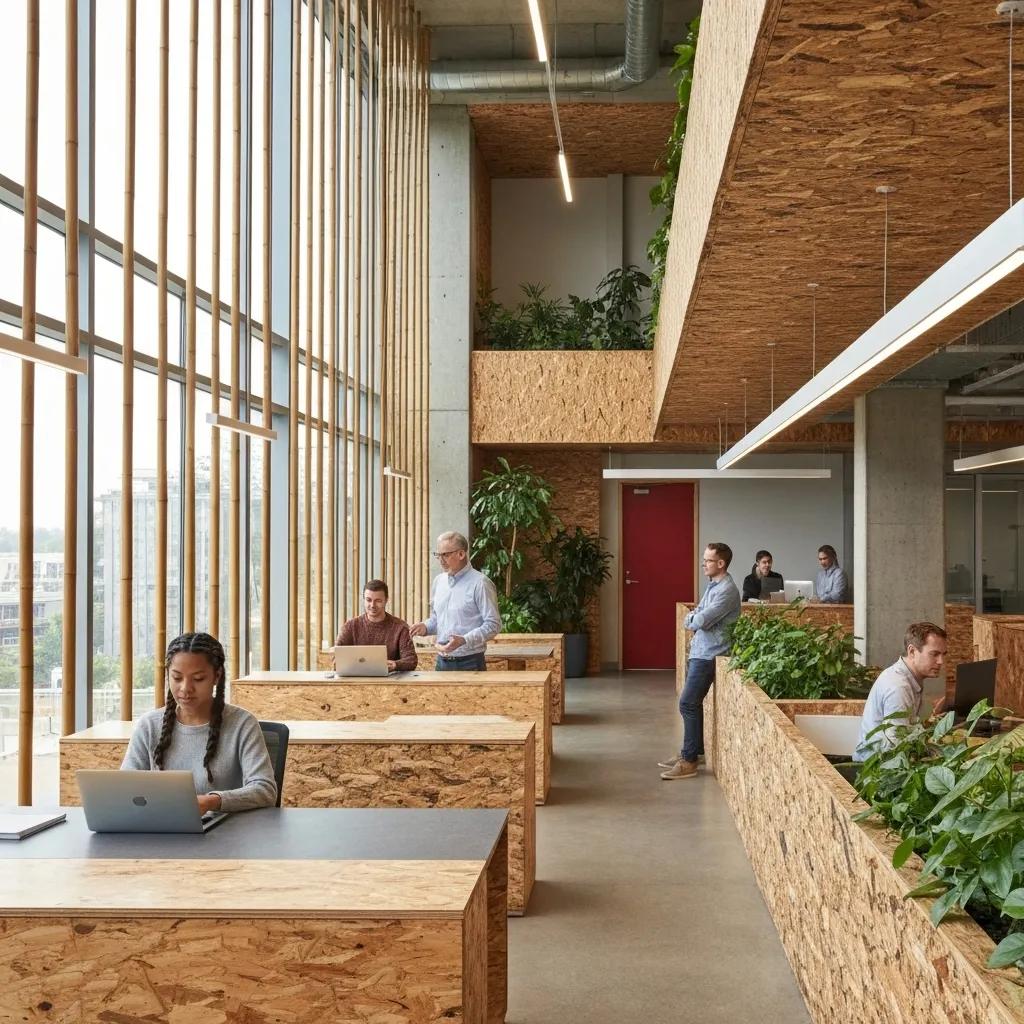
Recycled wood options such as reclaimed oak, pine, and walnut provide sturdy floorboards and bespoke furniture panels while diverting timber from waste streams. These species feature distinctive textures, natural patinas, and long service lives. Their rustic character integrates seamlessly with modern office layouts, enhancing warmth and sustainability. Transitioning from wood, bamboo flooring brings rapid renewability and visual lightness into eco-conscious workspace design.
How Does Bamboo Flooring Enhance Sustainability and Design?
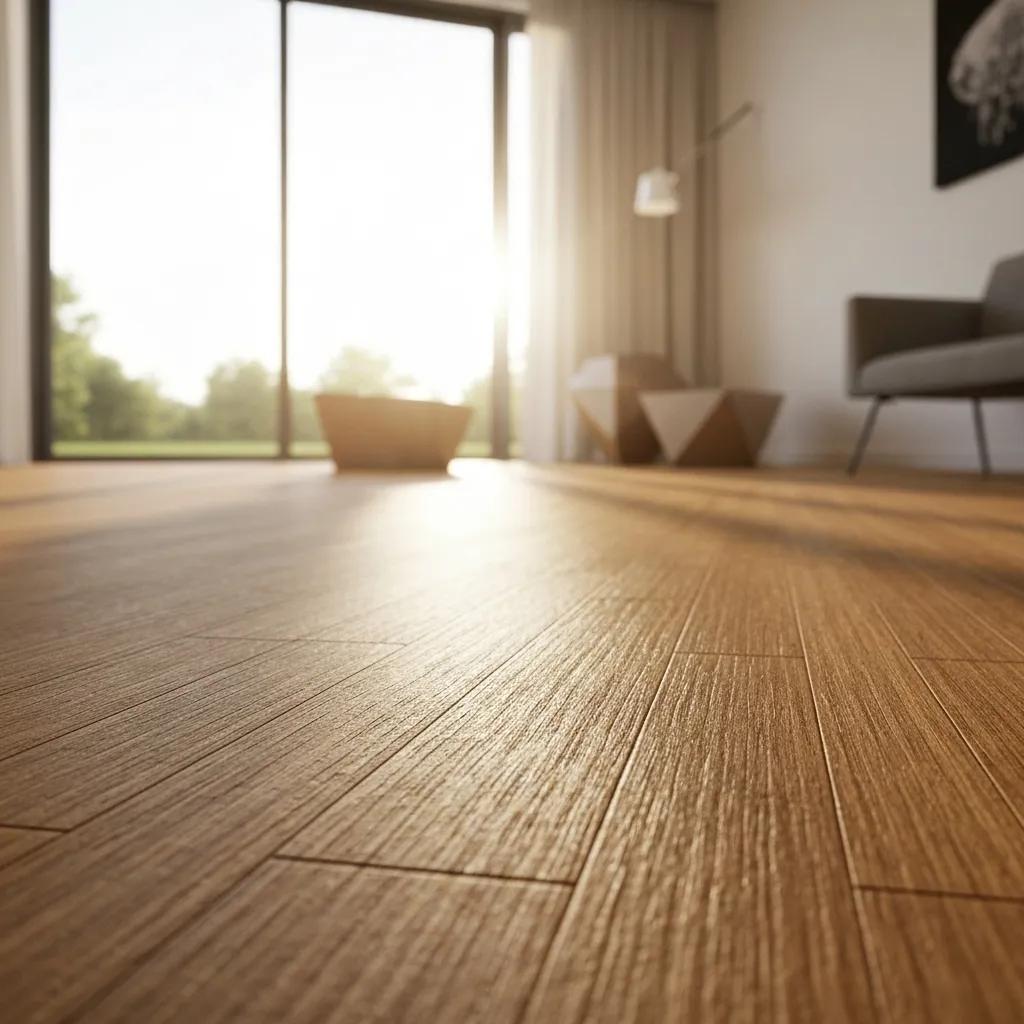
Bamboo flooring leverages fast-growing stalks that sequester significant CO₂, then undergo carbonization processes to yield durable planks. This renewable grass achieves hardness ratings comparable to oak and resists moisture when properly finished. Aesthetically, bamboo’s linear grain brightens interiors and complements minimalist furnishings. Embracing bamboo sets the stage for healthier paints that improve indoor air quality.
Why Choose Low-VOC Paints for Healthier Office Environments?
Low-VOC paints utilize water-based formulas that emit less than 50 grams per liter of volatile organic compounds, thereby reducing headaches and respiratory irritation among occupants. By replacing solvent-heavy coatings, these paints maintain color fidelity and washability without compromising air quality. Their application aligns directly with biophilic design goals by fostering cleaner, nature-inspired interiors before advancing into recycled furniture options.
What Are the Advantages of Recycled Plastic and Cork in Office Furniture?
Recycled plastic resin and cork composites repurpose industrial waste and sustainably harvested bark into ergonomic chair shells, acoustic panels, and tabletop inlays. The plastic variants resist stains and impacts, while cork’s cellular structure absorbs sound and provides thermal insulation. Together, they exemplify circular economy principles by closing material loops and enhancing both comfort and performance.
Beyond material selection, eco-conscious design principles amplify environmental and human benefits in office renovations.
How Do Eco-Conscious Design Principles Improve Office Renovations?
Eco-conscious design principles integrate nature connections, resource efficiency, and health-focused materials into renovation plans to elevate sustainability and occupant satisfaction. Core strategies leverage biophilia, optimized energy systems, and air-quality controls to create resilient workspaces.
What Is Biophilic Design and How Does It Benefit Office Workers?
Biophilic design weaves natural elements—living walls, daylighting, indoor plants—into built environments to reinforce human-nature bonds. This approach reduces stress, boosts creativity by up to 15 percent, and increases productivity by 6–15 percent.
Benefits of Biophilic Design in Workplaces - in English
This research supports the article’s assertion that biophilic design enhances employee well-being and productivity.
How Can Energy Efficiency Be Integrated into Office Renovations?
Energy efficiency combines LED lighting, smart controls, and high-performance HVAC systems to minimize consumption and operational costs. Key tactics include:
- Installing daylight-sensing dimmers that adjust artificial lighting based on natural illumination
- Implementing programmable thermostats and zoned climate control to reduce peak usage
- Upgrading to ENERGY STAR-rated appliances and ventilation units for consistent performance
These measures deliver average energy savings of 25 percent in LEED-certified buildings and naturally complement efforts to improve indoor air quality.
Energy Savings in LEED-Certified Buildings - in English
This citation validates the article’s claim regarding the energy-saving potential of sustainable office renovations and LEED certification.
Why Is Indoor Air Quality Critical in Sustainable Office Design?
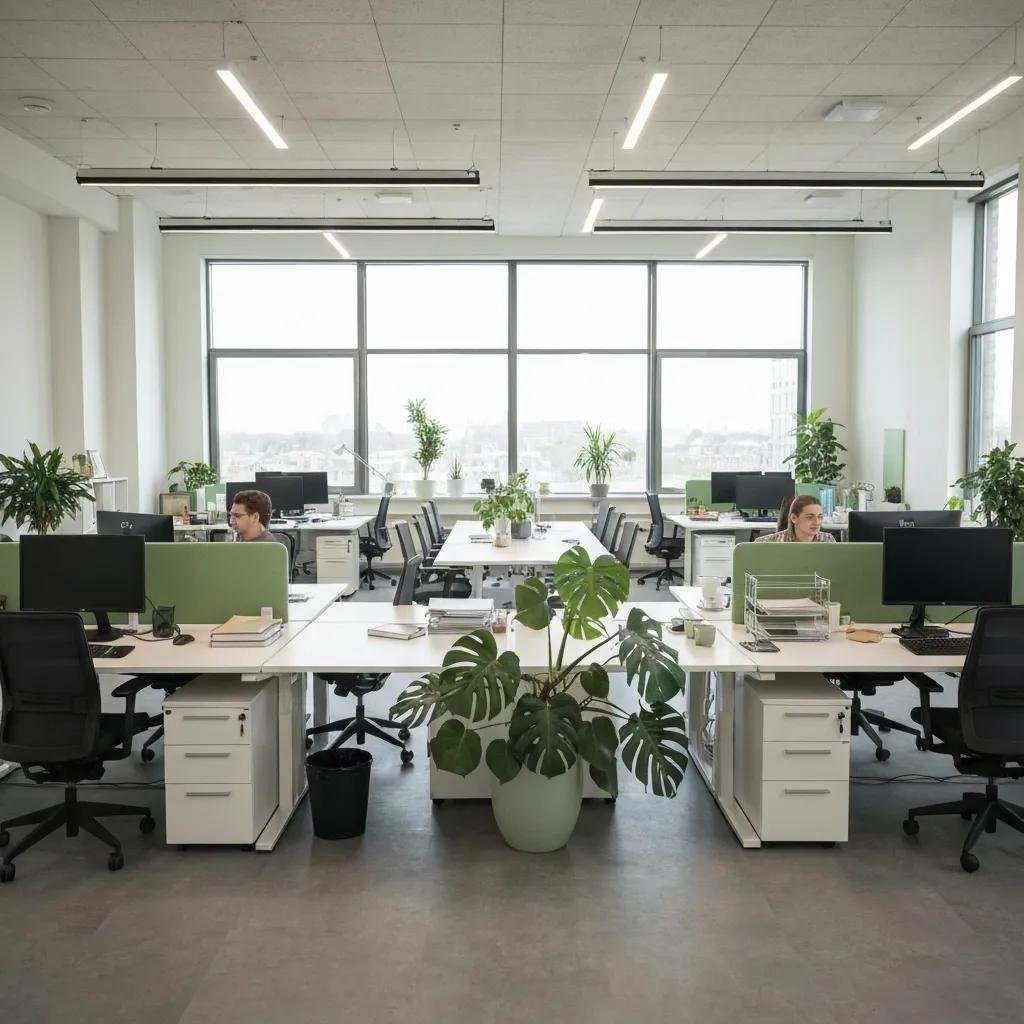
Indoor air quality hinges on adequate ventilation, pollutant-capturing filters, and low-emitting finishes to protect respiratory health and cognitive function. Poor air quality can increase absenteeism by 50 percent, whereas improved ventilation and filter systems reduce VOC concentrations by up to 70 percent. Strong air quality practices reinforce biophilic and energy strategies, guiding toward formal green building certifications.
What Role Does LEED Certification Play in Sustainable Office Renovations?
LEED certification provides a standardized framework for verifying sustainable building performance across energy, materials, and occupant experience. Achieving Silver, Gold, or Platinum levels signifies quantifiable environmental stewardship and often unlocks financial incentives or tax benefits for businesses.
How Can Offices Achieve LEED Certification Levels (Silver, Gold, Platinum)?
Offices pursue LEED points through optimized site planning, energy modeling, sustainable material sourcing, and indoor environmental quality improvements.
- Silver (40–49 points): Focus on energy savings, water efficiency, and basic material credits
- Gold (50–59 points): Expand renewable energy use, enhanced ventilation, and advanced waste diversion
- Platinum (≥60 points): Integrate net-zero systems, innovative water reclamation, and full life-cycle assessments
Each tier builds on holistic practices to advance project sustainability.
What Are the Benefits of LEED-Certified Office Spaces?
LEED-certified spaces consume up to 25 percent less energy and 11 percent less water while reducing greenhouse gas emissions. Tenants experience a 67 percent higher likelihood of job applications due to corporate sustainability reputation. These environmental and social advantages translate into stronger brand value and measurable cost savings over time.
How Can Businesses Implement Sustainable Materials in Office Renovations?
Businesses can streamline green renovations by partnering with expert contractors, leveraging certified suppliers, and applying circular-economy practices. For project management and execution, companies may consider professional eco-conscious office remodeling services to ensure material quality and compliance.
| Strategy | Action | Outcome |
|---|---|---|
| Certified Sourcing | Select FSC- or GREENGUARD-certified products | Ensures responsible harvesting and low emissions |
| Closed-Loop Waste | Donate or repurpose demolition debris | Reduces landfill contributions by up to 40 percent |
| Local Procurement | Purchase regionally manufactured materials | Minimizes transport emissions and supports local economies |
Implementing these strategies fosters operational efficiency and aligns with broader corporate social responsibility objectives.
Where to Source Certified Sustainable Materials for Office Projects?
Reputable suppliers include Forest Stewardship Council-endorsed lumber yards, GREENGUARD-listed paint manufacturers, and ISO-certified recycled plastics vendors. Verifying chain-of-custody certifications and product data sheets ensures material transparency and performance consistency.
What Are Effective Waste Reduction Strategies During Renovations?
Effective waste reduction leverages deconstruction methods, on-site sorting for recycling, and donation networks for reusable fixtures. By diverting up to 80 percent of renovation debris from landfills, businesses reduce disposal fees and uphold circular economy principles before measuring occupant benefits.
What Are the Key Benefits of Eco-Friendly Office Renovations?
Eco-friendly office renovations deliver tangible environmental, human-health, and financial returns. By integrating sustainable materials and design, companies foster healthier workplaces, optimize resource use, and demonstrate leadership in environmental stewardship.
How Do Sustainable Materials Enhance Employee Well-being and Productivity?
Natural materials and improved air quality nurture cognitive focus, lower stress hormonally, and reduce sick days by up to 50 percent. Employees in green offices report 15 percent higher creativity and 6–15 percent productivity gains, reinforcing business performance goals.
What Cost Savings Result from Green Office Renovations?
Sustainable renovations yield energy and water savings of 25 percent and 11 percent respectively, while maintenance costs decline due to durable, low-emitting materials. Over a ten-year horizon, businesses can achieve ROI payback periods under five years, aligning environmental impact with fiscal responsibility.
Eco-conscious office renovations unite environmental stewardship, human health, and financial performance, establishing workspaces that inspire well-being and productivity. These practices position companies at the forefront of sustainable design and deliver measurable benefits across people and planet.