Sustainable Materials in Office Renovation: Best Green Practices for Eco-Friendly Commercial Spaces
Renovating commercial offices with sustainable materials can cut carbon emissions by up to 35% while boosting employee well-being and long-term cost savings.
This guide lays out the key environmental and health benefits of green materials, compares top eco-friendly options, details energy-saving lighting and HVAC strategies, reviews waste management practices in a circular economy, and explains leading green building certifications. Adopting these best practices ensures improved indoor air quality, reduced operating expenses, and enhanced corporate sustainability performance.
What Are the Key Benefits of Using Sustainable Materials in Office Renovation?
Sustainable materials in office renovation reduce resource depletion by sourcing reclaimed or rapidly renewable inputs, lower toxic emissions through low-VOC products, and foster durable workspaces that deliver ongoing value. For example, choosing bamboo flooring avoids high-energy production processes while improving air quality.
How Do Sustainable Materials Reduce Environmental Impact?
Sustainable materials cut a building’s carbon footprint by minimizing embodied energy, diverting waste from landfills, and conserving virgin resources.
- Reclaimed timber prevents deforestation
- Recycled metals reduce mining demand
- Natural linoleum and cork biodegrade
These strategies shift renovation projects toward a closed-loop cycle that conserves ecosystems and lowers greenhouse gases.
In What Ways Do Sustainable Materials Improve Indoor Air Quality and Employee Well-being?
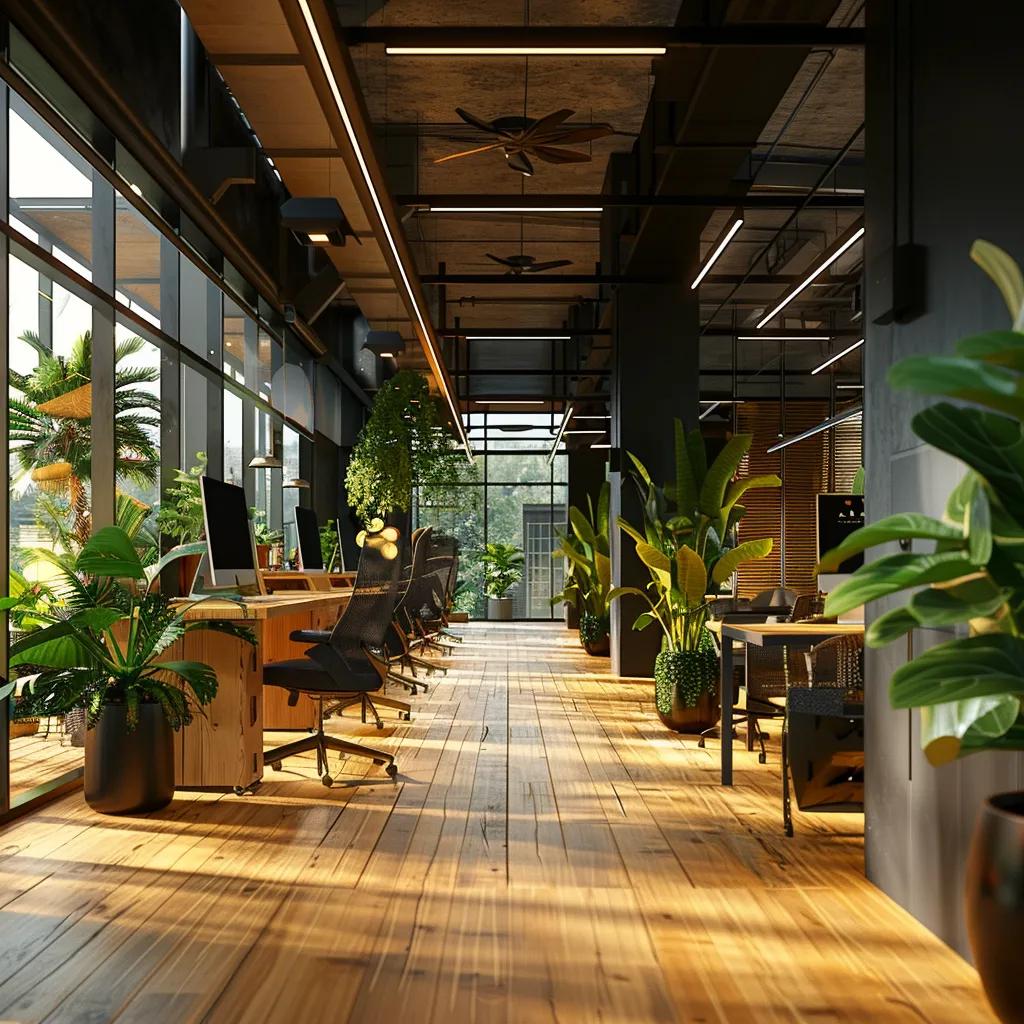
By eliminating formaldehyde and volatile organic compounds, low-VOC paints and plant-based finishes maintain clean air. Biophilic accents like natural wood and cork surfaces reduce stress and enhance focus. These design choices foster healthier, more productive environments.
What Are the Long-Term Cost Savings and ROI of Green Office Renovations?
Investing in durable sustainable products yields lower maintenance and replacement expenses over time. Energy-efficient lighting and high-performance insulation cut utility bills by up to 20%. The combination of reduced operating costs and improved asset value delivers a compelling return on investment.
Which Sustainable Building Materials Are Best for Office Renovations?

Eco-friendly building materials encompass reclaimed, recycled, and rapidly renewable options that combine aesthetics with performance. Using these materials decreases environmental impact, enhances occupant health, and often complies with green certification criteria.
| Material | Attribute | Key Benefit |
|---|---|---|
| Reclaimed Wood | Origin: Deconstructed buildings | Low embodied energy and unique character |
| Recycled Metal | Content: ≥75% post-consumer | Supports circular economy and durability |
| Bamboo Flooring | Growth cycle: 5 years | Rapidly renewable with moisture resistance |
These materials form the backbone of a sustainable fit-out, setting the stage for targeted applications in flooring, furniture, and fixtures.
What Are the Benefits and Applications of Reclaimed Wood in Offices?
Reclaimed wood offers rich patinas, structural strength, and minimal processing energy. It suits accent walls, desks, and shelving, adding warmth and character while avoiding new logging.
How Does Recycled Metal Support Circular Economy in Commercial Design?
Recycled aluminum and steel incorporate high post-consumer content, reducing mining and processing emissions. These metals excel in durable framing, light fixtures, and hardware that endure heavy office use.
Why Choose Bamboo, Cork, and Linoleum for Eco-Friendly Office Flooring?
Natural flooring options combine rapid renewability with biodegradability, antimicrobial properties, and thermal comfort. Their low VOC emissions contribute to healthy indoor climates and resilient floor systems.
How Do Low-VOC Paints and Finishes Enhance Healthy Workspaces?
Low-VOC coatings curtail airborne irritants and odours, supporting occupant comfort and respiratory health. Their chemical formulation aligns with stringent indoor air quality standards.
How Can Energy Efficiency Be Optimized During Office Renovations?
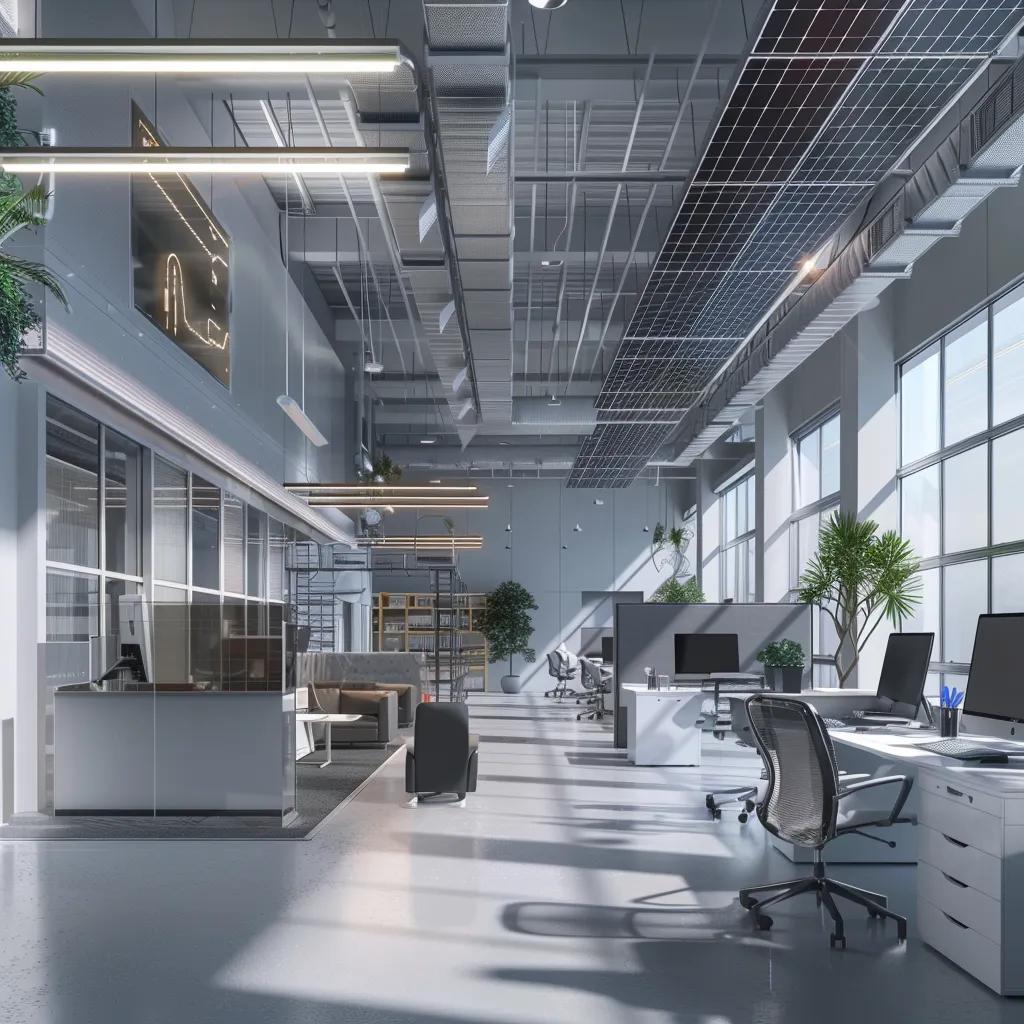
Optimizing energy efficiency involves integrating cutting-edge lighting, HVAC controls, insulation upgrades, and renewable generation that collectively shrink utility consumption and carbon output.
| Technology | Energy Saving | Benefit |
|---|---|---|
| LED Lighting | 50–75% reduction vs. incandescent | Extended lifespan with lower load |
| Smart HVAC | Automated controls | Precise temperature management |
| Solar Panels | On-site generation | Offsets grid electricity |
These solutions form a layered strategy that targets electrical, heating, and cooling demands for maximum efficiency.
What Are the Best LED Lighting Solutions for Commercial Offices?
High-efficacy LED fixtures deliver uniform, glare-free illumination while consuming up to 75% less energy than legacy systems. Integrated sensors enable occupancy-based dimming.
How Do Smart HVAC Systems and Insulation Improve Energy Use?
Smart thermostats and zoning controls adapt to occupancy patterns, reducing heating and cooling waste. Complementary high-R-value insulation cuts heat transfer, stabilizing temperatures.
What Role Do Solar Panels and Renewable Energy Play in Green Offices?
Rooftop photovoltaic arrays generate clean electricity that offsets grid usage, lowers operating costs, and contributes to sustainability goals. Paired with energy storage, they enhance resilience.
How Is an Energy Audit Conducted to Identify Efficiency Opportunities?
An energy audit maps current consumption, inspects building envelopes, tests HVAC performance, and quantifies savings potential. The resulting report guides targeted upgrades that yield measurable returns.
What Waste Management and Circular Economy Practices Support Sustainable Office Renovations?
Adopting deconstruction, material reuse, and structured recycling channels diverts renovation debris while preserving value in existing resources. This approach minimizes landfill impact and supports closed-loop asset management.
How Can Deconstruction and Recycling Minimize Renovation Waste?
Selective deconstruction salvages fixtures, furniture, and millwork for repurposing. On-site sorting ensures materials like drywall, metals, and timber enter recycling streams rather than waste haulers.
What Are Effective Strategies for Reducing Packaging and Construction Waste?
Ordering bulk-packaged products, accepting materials on pallets, and coordinating supplier take-backs limit waste. Pre-assembly off-site reduces packaging and on-site cutting scraps.
How Do Green Waste Management Systems Enhance Sustainability?
Centralized waste stations with labelled bins for paper, plastic, wood, and metals streamline diversion. Tracking and reporting volumes reinforce accountability and continuous improvement.
Which Green Building Certifications and Standards Guide Sustainable Office Renovations?
Green certifications validate sustainable strategies through measurable criteria, driving environmental performance, occupant health, and regulatory alignment.
What Is LEED Certification and How Does It Apply to Commercial Offices?
LEED rates projects based on energy, water, materials, and indoor environmental quality. Achieving Silver, Gold, or Platinum demonstrates leadership in sustainable design and operations.
How Does BREEAM Support Sustainable Office Refurbishment?
BREEAM assesses refurbishment projects on management, health, energy, transport, and innovation. Its detailed scoring framework fosters holistic sustainability improvements.
What Are the WELL Building Standard Principles for Employee Health?
WELL focuses on Air, Water, Nourishment, Light, Fitness, Comfort, and Mind, promoting occupant well-being through evidence-based design interventions.
What Incentives and Regulations Encourage Green Office Renovations?
Tax credits, grants, and utility rebates reward energy-efficient upgrades. Local building codes increasingly mandate performance thresholds that align with green certification requirements.
Renovating with sustainable materials delivers immediate health and environmental advantages while unlocking long-term financial value. By selecting reclaimed, recycled, and low-VOC products, projects reduce carbon footprints and create healthier spaces. Layering energy upgrades with circular waste practices amplifies operational efficiency and supports corporate sustainability objectives. Pursuing recognized certifications ensures accountability and positions commercial offices as leaders in the transition to a greener built environment.